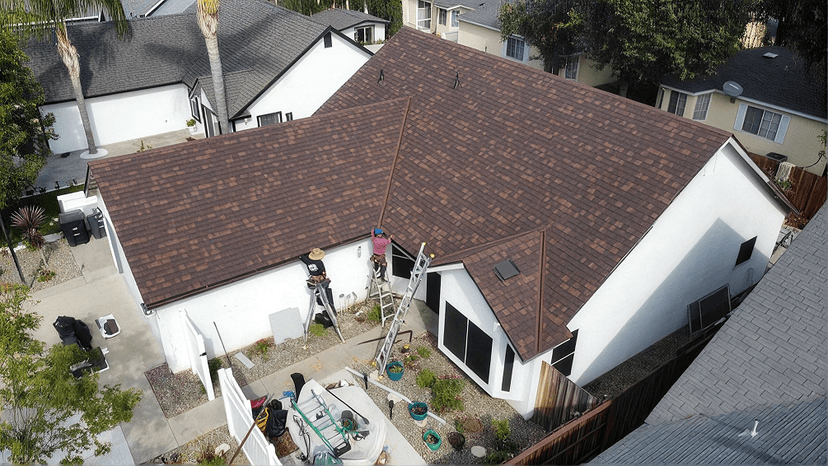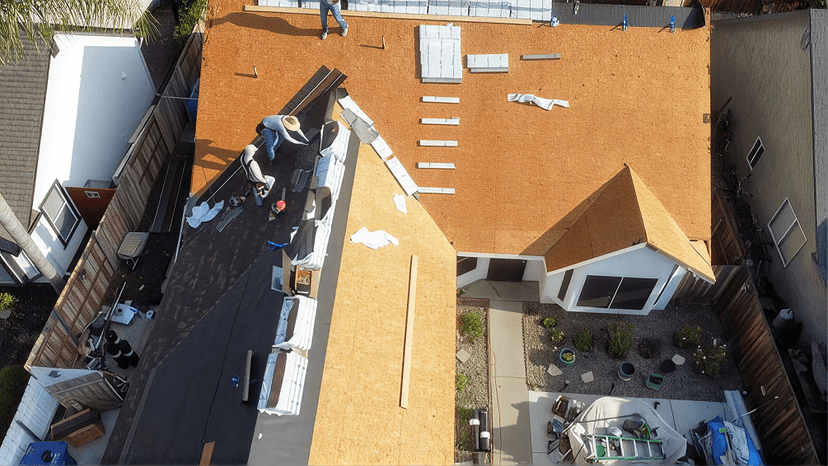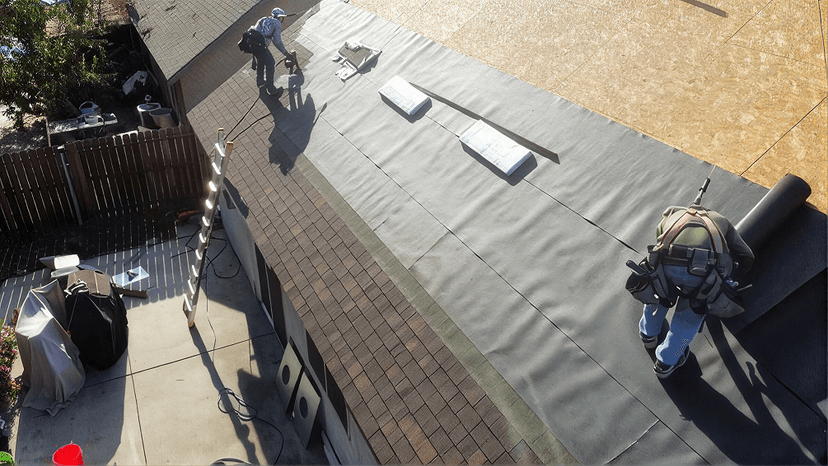
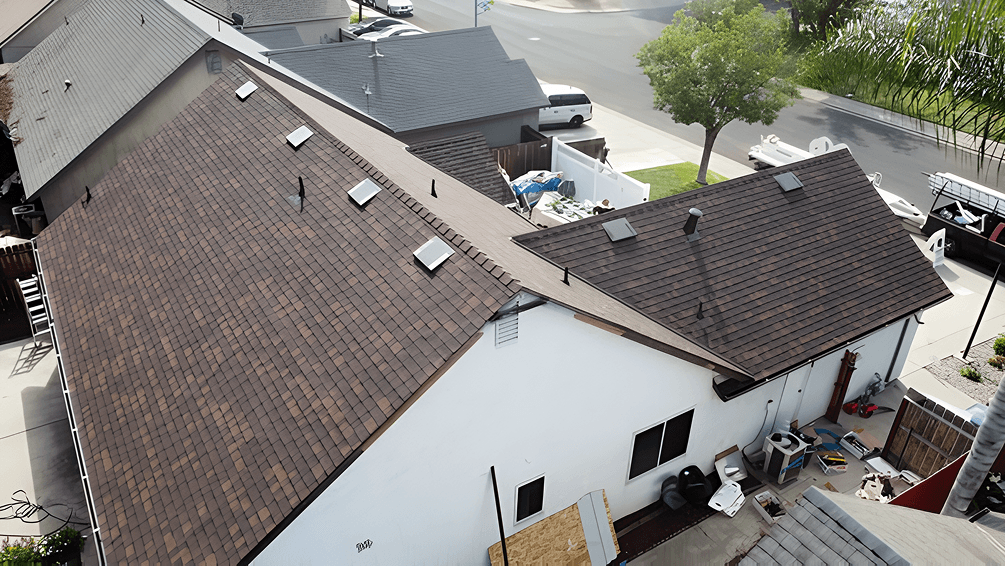
Shingle manufacturers advertise 25- to 30-year lifespans, and in mild coastal climates that's realistic. In Delhi, Turlock, Modesto, and the rest of the Central Valley, the story is different. Months of 95–105° days bake the asphalt in shingles, drying out the oils that keep them flexible. The result: roofs here often age five to eight years faster than the label suggests.
What actually wears a roof out here
Three things do most of the damage in the Valley, and only one of them is rain.
- Heat cycling. Roof surfaces can hit 150°+ on a July afternoon, then drop 60 degrees overnight. That daily expand-and-contract slowly cracks shingles and fatigues nails and flashing.
- UV exposure. We get roughly 260 sunny days a year. UV breaks down the asphalt binder, which is why you'll find granules collecting in gutters. That's your roof's sunscreen washing away.
- Winter moisture. Tule fog and winter storms aren't dramatic, but they're persistent. Water finds every seam the summer heat opened up.
Realistic lifespans by material
Based on what we see on Valley roofs, not the brochure: three-tab shingle, 15–20 years; architectural shingle, 20–25 years; cool-roof rated shingle, a few years beyond that thanks to lower surface temps; tile, 40+ years for the tile itself, though the underlayment beneath usually needs replacing around year 20–25.
If your Valley roof is past year 18 and has never been inspected, get eyes on it before the next winter. Not because it's necessarily failing, but because catching a $400 repair now beats a $2,000 one in January.
Signs your roof is aging faster than its years
From the ground, look for shingle edges curling upward, dark streaks or bald patches where granules have worn off, and any shingles that look wavy after a hot week. In the gutters, a layer of coarse granules after rain is the clearest early signal. Inside, check ceiling corners and closet ceilings after the first big storm of the season, that's where slow leaks show up first.
None of these mean you need a new roof tomorrow. They mean it's time for an inspection, which, at least from us, costs nothing and comes with photos of everything we find.